
Search engine optimization (SEO) for businesses is a topic that’s often shrouded in a cloak of mystery—but it doesn’t have to be.
What Is Organic Traffic?
It’s not traffic that’s grown without pesticides — organic traffic is a term used to describe visitors who arrive at your website via unpaid search results. These visitors searched for a keyword or phrase in Google, Bing, Yahoo, or another search engine, your website popped up in the results, and they clicked.
In comparison, other common types of website traffic you may be familiar with include:
- Paid traffic. Visitors who arrive at your website via digital advertisements.
- Direct traffic. Visitors who directly type your URL into their browser’s address bar.
What Is SEO?
Plain and simple, SEO is the practice of building a fast, easy-to-navigate website with relevant, digestible content to increase your organic traffic. To attract unpaid traffic organically, your website needs to align with the standards set forth by the companies that provide search engines for general public use…aka Google.
The logic follows that with good SEO, your website can get better search engine rankings, which gives you greater visibility and more organic traffic.
SEO, Organic Traffic, and Your Website
Creating SEO value for your business breaks down to building a reliable, user-friendly, and consumable website that answers your customers’ questions or solves your customers’ problems.
To get started thinking about SEO and discovering where your business can make meaningful improvements that will quickly pay off, we’ve put together a list of recommendations that will help you improve your SEO rankings. We’ve broken SEO down into two categories, content-based and technical.
By following the tips outlined in this article, you can improve your business’s website and boost your overall SEO value.
Content-Based SEO Tips
To get started with improving your SEO, you need to audit, research, and improve your content. Your content includes what’s on your website, and how your company is represented across the internet and social media.
1. Audit Your Website Content
Your content makes or breaks your business’s SEO. Not only does your website content need to be informative, but it needs to be easy to find, up-to-date, and easy to consume.
Know what keywords you need to optimize for
Keywords are the words or phrases people type into Google to find what they’re looking for. Google presents search results that it best thinks will match what people want to find.
For example, if someone searches for hot dogs, Google will return a list of restaurants that sell hot dogs. It will also display related information about hot dogs, like recipes and history. Here’s the thing—if your business sells hot dogs, but there isn’t any content on your website that discusses hot dogs, Google won’t think you have the right information people want, and your business won’t display in Google’s search results.
Your website should contain as much content you can produce about the keywords for which you want to rank. Generally, the more content, the better—as long as it’s helpful, unique, and matches what your customers want to find. To get started, make a list of a few keywords you want to improve your SEO for, audit your website for those keywords, and begin building out your content accordingly.

Focus on your user experience
When’s the last time you dug into your website and examined your overall user experience? You should regularly make sure your website content matches what your prospective customers are looking for in a consumable, informative way. If visitors reach your site but can’t find the answers to what they need, they’ll likely go back to their search results and click elsewhere, probably on one of your competitors.
When reviewing your content, it can be difficult to notice your own errors. It’s a good idea to have an outside expert review your content to ensure that you’re providing an understandable message for your customers.
2. Improve Your Credibility
Think about the types of content you look at when you’re shopping for a new product or service. Do you enjoy reading something that’s incredibly technical and difficult to understand? Probably not. You want a wealth of information, and you want quick, complete answers to your questions.
To make your website relevant and credible, you need to represent your business’s in-person persona accurately. Consider how you explain your products to your customers face-to-face and try to replicate that experience on your website.
Build trust with your customers
Specific types of content can help you earn your audience’s trust. For example, positive reviews and testimonials from existing customers improve the value of your webpages. It’s one thing to say you offer the best service around—it’s entirely more meaningful when 50 different customers say you offer the best service.
Additionally, you can use business statistics to your advantage. Flaunt how many customers you have, recent work, or how long you’ve been in business. Show pictures of you helping your customers with your product.
3. Research Your Competitors
Following SEO best practices can help your business stand out from your competition. To get the most out of your website and improve your SEO, research your competitors online to figure out how you can make your website more competitive in the marketplace. They wouldn’t be competitors if they weren’t doing something right. By researching your competitors, you can underscore your business’s value prop and identify the keywords that help you stand out from the pack.
When doing your research, keep an eye out for anything that’s missing from your website. Are you talking about products the way your customers search for products, or are you relying on industry jargon and outdated imagery? Are there services that your website is missing that you can discuss? Do your website images represent your business well?
Adding content that’s relevant to customer demands can help you improve your business’s SEO.
4. Examine Your Business’s Social Media Presence
Does your business use social media? If so, great. If not, you should be taking advantage of the community and brand-enhancing benefits that social media platforms like Facebook, Twitter, and LinkedIn can offer your business.
Define your business’s public persona
Social media platforms give your business a unique opportunity to reach customers and supplement your website’s SEO value. Posting regularly on your business’s social media platforms improves your business’s customer engagement and builds awareness about your products and offerings.
Similarly, you can use your social media platforms to help drive traffic to your website. Your business’s target audience is unique to you. While some companies choose to focus their efforts on Instagram and Snapchat, others may find more success on YouTube or Pinterest. Your best bet is to develop a social media strategy that works for your business and stick to it.
5. Review Your Reviews
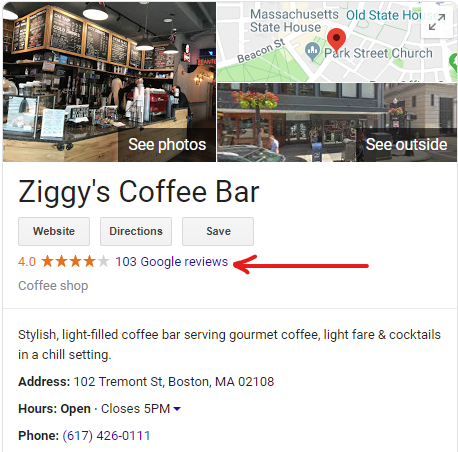
Routinely Google your business’s name and take a look at the right side of the page. You should be able to see if anyone has reviewed your business and review your business’s average star rating.
Check your reviews on Google
Clicking on the “# Google Reviews” text will allow you to read all the reviews written about your business on Google. Reviewing your reviews can give you a good idea of your business’s online reputation.
You can also determine if any negative or positive reviews require a response from you. Managing your business’s online reputation contributes to your overall SEO. Search engines favor and recommend well-liked companies over disliked ones with bad reviews.
Check your reviews on social media
Other websites, like Facebook and Yelp, allow users to leave reviews as well. Be sure to review all the sites and places where your business has an active online presence. One bad review could be hurting your businesses. Similarly, no reviews could deter people from choosing your company over a competitor.
Encourage your customers to leave good reviews when they receive good service.
Technical SEO Tips
The technical side of SEO includes inspecting the nuts and bolts of your website, including the code that holds it all together. When it comes to technical SEO, you need to consider Google’s Webmaster Guidelines, as well as website security, linking, page speed, URL structure, and more.
6. Build Out Links on Your Website
Website links to, from, and across your website have a substantial impact on your SEO value.
Links from your website to reliable websites improve your online credibility, proving you’re both a reliable source for information and that you know how to research and report credible content. Also, linking across your website pages can help users discover information about your business and keep them on your website longer, building more value from your existing webpages. Contact us to learn more about link building strategies.
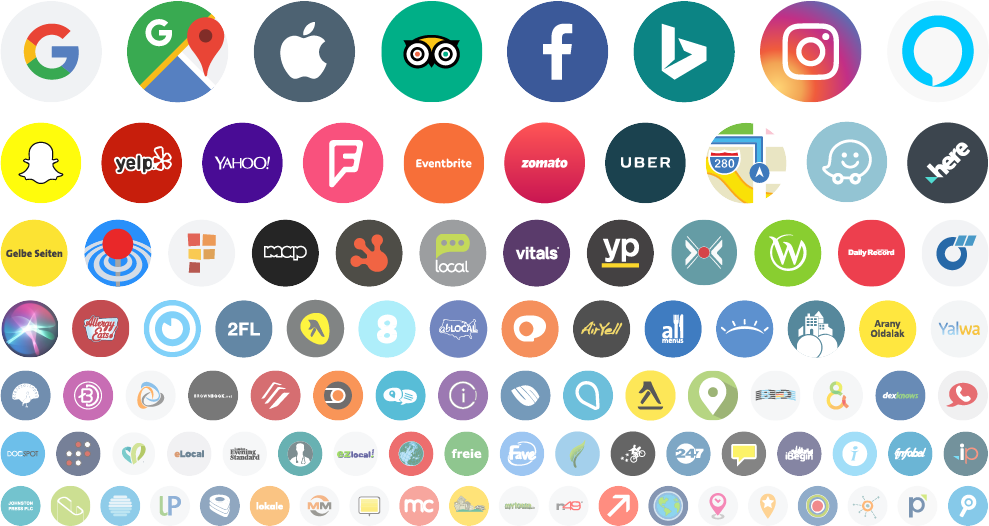
External links to your website calculate considerably into your business’s SEO value. You can quickly increase your external links’ quality by verifying your business’s contact information everywhere it’s listed online. Searching the web for your contact information and keeping the data up-to-date can be time-consuming. Fortunately, services like Business Listing Management can do all the work for you, managing your business contact data for hundreds of websites, search engines, mobile applications, voice assistants, GPS systems, and social networks.
7. Refresh Your Memory of Google’s Webmaster Guidelines
If you want your business to be found in Google Search, it’s critical that your website meets and follows Google’s Webmaster Guidelines for SEO. Generally, when you play by Google’s rules, you can assume you’ll be rewarded with better search ranking placement. Keep in mind Google is smart—you want your website to be helpful to your users. If your website gives your users the content they’re looking for, Google will catch on eventually.
Google’s guidelines include basic requirements, like constructing pages containing relevant content and focusing on unique content. These guidelines also advise against SEO bad practices like relying on automatically generated content, adding in sneaky redirects, using hidden text, and more. Google’s Webmaster Guidelines also dive into technical subjects, like URL structure, page speed, duplicate content, and indexing.
At the very least, you can make sure Google isn’t penalizing your website for violating its Webmaster Guidelines. We can help answer any of the more technical questions you have.
8. Monitor Your Website for Cyberattacks
Being considered a dangerous, untrusted website isn’t something you want on your record regarding SEO value.
Google indexing and website security
Google builds its library of websites for Google Search by indexing. Through this process, Google deploys web crawlers that scan and record the code published by publicly available websites. Using the information gathered by the web crawlers, Google organizes the data to match content with the text users enter into the Google Search bar. If you’re curious, learn more about how Google Search works.
You have no control over how often Google indexes your website. A single cyberattack that employs practices like web scraping, keyword loading, or sneaky redirects can have a painful, lasting effect on your website’s reputation if web crawlers capture the attack in progress. There are tools you can employ to help monitor for and detect cyberattacks.
If you’ve fallen victim to a website cyberattack in the past, you can request Google to re-index your site. Learn more about asking Google to crawl your website.
Monitoring your website security
Google Analytics can provide you with the free tools you need to monitor your website traffic. Knowing your customer base and the locations you advertise your business, you can detect and filter out spam traffic. However, many small and medium-sized businesses don’t have the capacity to keep an eye on Google Analytics 24/7. We can help.
High Touch provides website security monitoring services and security scans, coupled with regular security updates to help you keep your website and business safe.
9. Perform a Technical Website Audit
Even if your website looks like it’s up to snuff on the front end, there may be back-end coding issues that are damaging your SEO value and hindering your user experience. Google has strict regulations when it comes to technical website performance and SEO. Learn more about Core Web Vitals.
You should regularly plan and conduct technical website audits to ensure your website isn’t setting off any SEO red flags. As you might assume, technical website audits investigate the nuts and bolts of your website, including:
- Speed. Does your website meet the minimum speed requirements? Slow websites equate to a bad customer experience, which results in poor SEO.
- Broken links. It’s good to have links on your websites. It’s painful if Google detects that the links or broken or go to nonexistent webpages.
- Code. Inefficient code or outdated can slow down your website and provide a terrible user experience, which hurts SEO.
- URL Structure. Does your website have easy-to-read URLs? Are you using hyphens instead of underscores?
- Compatibility. Websites should be just as usable on mobile devices as they are on desktops.
And that’s just the beginning. Contact us today to get a free website assessment and learn more.
When All Else Fails, Consider Investing in Paid Advertising
There’s one foolproof way to get your business to the top of Google’s search rankings—buy your way in with paid advertising. With a big bank account, you can buy your way to the number one position.
If you employ this strategy, invest in developing good, relevant content for your search ads that entice users to visit your page. Google is more likely to display search ads with text closely matching the search query paired with a relevant landing page on your website.
High Touch SEO Services
We make things easier. High Touch specializes in providing complete, integrated technology solutions for businesses. We can provide expert SEO services and assistance to help your business get the most from its website.
Contact us today to learn how your business can benefit from a High Touch SEO assessment.